
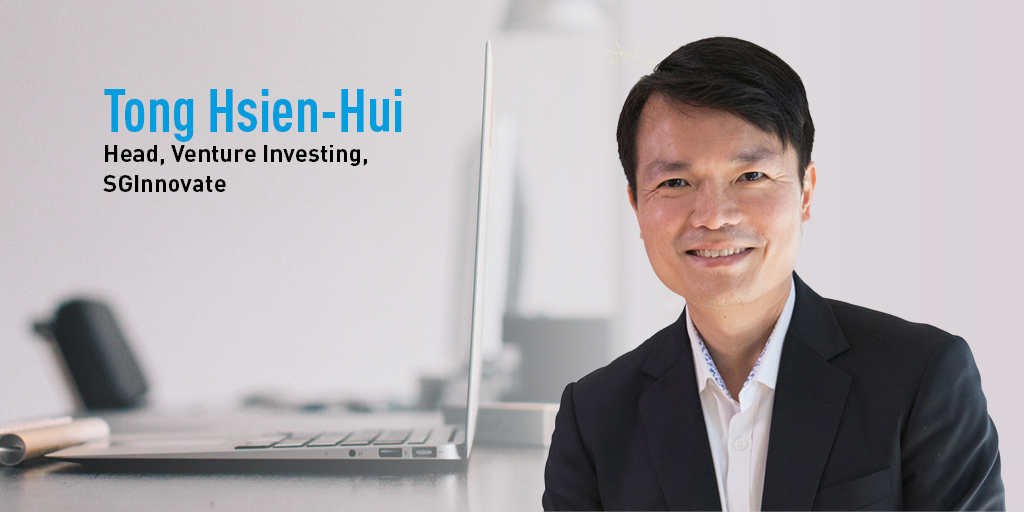
Deep tech is transforming just about every sector of world industry, and Singapore is emerging as a leading destination for innovative start-ups, says Tong Hsien-Hui, Head of Venture Investing at SGInnovate
Deep tech is transforming just about every sector of world industry, and Singapore is emerging as a leading destination for innovative start-ups, says Tong Hsien-Hui, Head of Venture Investing at SGInnovate
Albert Einstein, Marie Curie, Stephen Hawking – these are some of the game-changers that have made profound technological discoveries. In deep tech, researchers and scientists aim to solve some of our greatest environmental and social problems. Consider artificial intelligence (AI) that will develop vaccines in record time, robotics in the medical sector that could increase the success of surgeries, or quantum computing that accurately predicts weather patterns in fragile ecosystems. These form just a glimpse of what deep tech could enable.
These technologies require immense time and research to develop, and are thus well protected from being replicated. As the industry advances and institutions invest more capital in deep tech¹, scientists and academics are looking to commercialize their research.
While the US and Europe have been the forerunners in the deep tech field, Asia has caught up in the past decade. Singapore in particular aims to become a Global-Asia node of technology, innovation, and enterprise. Indeed, Singapore is an acknowledged global leader in scientific research and IP protection; the public sector has invested almost SGD 60bn in R&D over the past 25 years.² It boasts a large, vibrant community of start-ups, venture capital firms, angel investors, and incubators/accelerators. The deep tech sector in Singapore has grown fast over the past decade: the number of deep tech venture capital deals grew by over 30x to 129 from 2010 to 2019, and the aggregate value of these deals ballooned to $2.6bn.³
So where do the opportunities lie?
The Use of AI in Medtech
AI is an industry-agnostic technology and is widely adopted across sectors to improve operations. The healthcare industry is a huge beneficiary of AI, which has augmented the work of healthcare providers.
With societies struggling with an ageing population, demand for quality healthcare is rising exponentially across the world. In fact, the medical technology (medtech) market in Asia is poised to grow to about $133bn in 2020⁴, surpassing that of the EU as the second-largest market globally (behind the US).
The ongoing COVID-19 pandemic has also spurred medtech start-ups to innovate solutions to aid healthcare operations during the crisis. For instance, Singapore-based digital therapeutics start-up Biofourmis adapted its AI-based biosensor to monitor patients under quarantine and track the progression of COVID-19 symptoms, which has helped us to understand the virus better and develop vaccines.
We are also witnessing more medtech companies emerging from ‘stealth’ after years of undergoing proofs-of-concept and clinical trials. Singapore-based medical software company See-Mode helps clinicians to more accurately predict and assess stroke and vascular diseases through AI. The company recently received a Class B medical device approval from the Singapore Health Sciences Authority for its product, and is set to close its first commercial contracts.
In the years ahead, we expect to see more medtech players coming to the fore, pushing out innovations with successful case studies and putting investment dollars to good use.
Sowing the Seeds for Growth: Agtech and Foodtech
The world is set to face a 56% shortfall in food supply⁵ by 2050, due to climate change and a rapidly growing population. Nationwide lockdowns triggered by the COVID-19 pandemic are also affecting imports and exports of food.
For countries like Singapore, which rely heavily on food imports, finding solutions geared toward self-sufficiency is critical. Consumers are also becoming more socially conscious and selective in the food they consume, developing greater appetites for sustainably produced foods.
These trends are driving demand, leading to greater investor interest in agtech and foodtech start-ups.
Investing in Deep Tech
As interest in and demand for deep tech grows and private investors and VCs look to invest in the sector, it is crucial to understand the technicalities, complexities, and risks involved.
The history of technology has proven that those willing to take the plunge early often go on to reap the biggest rewards. As a pragmatic investor, we are highly selective in where we place our bets. We prefer deep tech start-ups with long-term potential that can go the distance from infancy to commercialization.
We see immense potential in the deep tech sector. In Preqin’s upcoming Markets in Focus: Private Equity & Venture Capital in Southeast Asia's Digital Evolution report, I will share more about the challenges of investing in deep tech, navigating these hurdles, and reaping the returns.
About SGInnovate
SGInnovate builds and scales deep tech start-ups into high-potential companies with global impact, focusing on transformational technologies such as AI, medtech, robotics, and quantum tech. With support from partners and co-investors, we back entrepreneurial scientists through investments, access to talent, and business-building advice.
¹ A BCG and Hello Tomorrow Report: The Dawn of Deep Tech Ecosystem, https://image-src.bcg.com/Images/BCG-The-Dawn-of-the-Deep-Tech-Ecosystem-July-2019-R-3_tcm9-221024.pdf
² Research, Innovation and Enterprise 2020 Plan, https://www.nrf.gov.sg/rie2020
³ Based on Preqin Pro data. ‘Deep tech’ in this article is defined as artificial intelligence, blockchain, medtech, healthtech, fintech, deep learning, and machine learning.
⁴ Meeting Growing Asia-Pacific Demand for Medical Technology, https://www.mckinsey.com/industries/pharmaceuticals-and-medical-products/our-insights/meeting-growing-asia-pacific-demand-for-medical-technology
⁵ How to Sustainably Feed 10 Billion People by 2050, https://www.wri.org/blog/2018/12/how-sustainably-feed-10-billion-people-2050-21-charts