
Global investment and advisory firm HMC Itajubá offers insight into the diverse investment landscape of Latin America, from investor appetite for high-return strategies and offshore alternatives, to the realities of the COVID-19 pandemic and regulatory constraints
Global investment and advisory firm HMC Itajubá offers insight into the diverse investment landscape of Latin America, from investor appetite for high-return strategies and offshore alternatives, to the realities of the COVID-19 pandemic and regulatory constraints
Mexico
The Mexican pension fund industry will be the most attractive area for alternative investments over the next five years. The industry boasts nearly $20bn in capital and has been increasing its alternatives allocations. As such, the average capital deployment to international GPs could increase from $75mn to upwards of $200mn per commitment.
Buyouts, more specifically, have been the strategy of choice for LPs in Mexico, either through direct LBO exposure or secondaries. Co-investment opportunities have also been popular among the largest LPs, in an effort to accelerate the allocation process.
Colombia
Colombian pension funds are another area of opportunity for international GPs looking to raise capital. The consolidation of the industry and its sophisticated investment teams have created one of the most attractive markets in the region. Adding to this tailwind, Colombian regulators also loosened limits to offshore alternatives commitments.
With these changes, however, alternatives allocations will now be aggregated into a single basket, favoring higher absolute return strategies at the expense of real estate, infrastructure, and private debt. But growing demand from more conservative local insurance companies, which have recently entered alternative asset classes, should help offset this bias.
Chile
In response to the COVID-19 pandemic, the Chilean congress permitted pensioners to withdraw up to 10% of their pension to make up for income lost due to the virus, first in July, and again in December. These withdrawals resulted in a combined $45bn leaving the system. The equity market rebound in the latter half of 2020, which offset some of the outflows, but pension funds ultimately pulled back on their alternatives allocations.
This retrenchment came at an unfortunate time for managers looking to raise capital. Prior to the outbreak, the Central Bank of Chile had increased private capital allocation limits across much of the pension system, aiming to improve risk-adjusted returns.
Unlike some of its regional peers, however, Chile’s pension funds have separate limits for private debt and private equity allocations, creating momentum for private debt. But the emphasis on high absolute returns could lead to more private debt investments in more levered share classes.
Peru
Peru, like Chile, also permitted pension withdrawals in 2020 to help offset the economic impact of COVID-19. The combined outflows amounted to about $8bn, or more than 20% of the plan’s AUM. As a result, pension funds were forced to pause their alternative investment programs, which are expected to remain on the sidelines in 2021. Any material engagement in alternatives from these plans should not be expected until 2022.
The few offshore investments in 2020 went primarily to large buyout and growth private equity funds, with a comparatively smaller amount committed to real estate.
Brazil
Against the backdrop of an unprecedented 2% base interest rate in Brazil, there has been greater portfolio diversification toward alternatives and international assets across the investor universe. While pension funds are still not able to invest in offshore private equity due to regulatory constraints, family offices and high-net-worth individuals have been consistently increasing their alternatives allocations. These allocations began with established global buyout funds some years ago, but are now diversifying into focused strategies like growth equity and sector-specific strategies.
Looking forward, we foresee continued growth in allocations to international private equity from family offices and high-net-worth individuals. However, should regulatory restrictions on pension funds be lifted, the significant upside potential would change this picture.
Looking Ahead
Across Latin America, a common theme we are seeing with LPs’ alternatives allocations is the push for higher absolute return strategies. As a result, this could create a bias toward higher-risk equity strategies at the expense of less volatile and lower-yielding alternatives markets like private debt, real estate, and infrastructure.
About HMC Itajubá
HMC Itajubá is a global investment and advisory platform with offices in São Paulo, Mexico City, Lima, Santiago, Bogotá, New York, and Silicon Valley. It recently advised Clayton, Dubilier & Rice on $1.2bn of commitments from Latin American investors to the firm’s latest buyout fund, representing 7% of the total fund size.
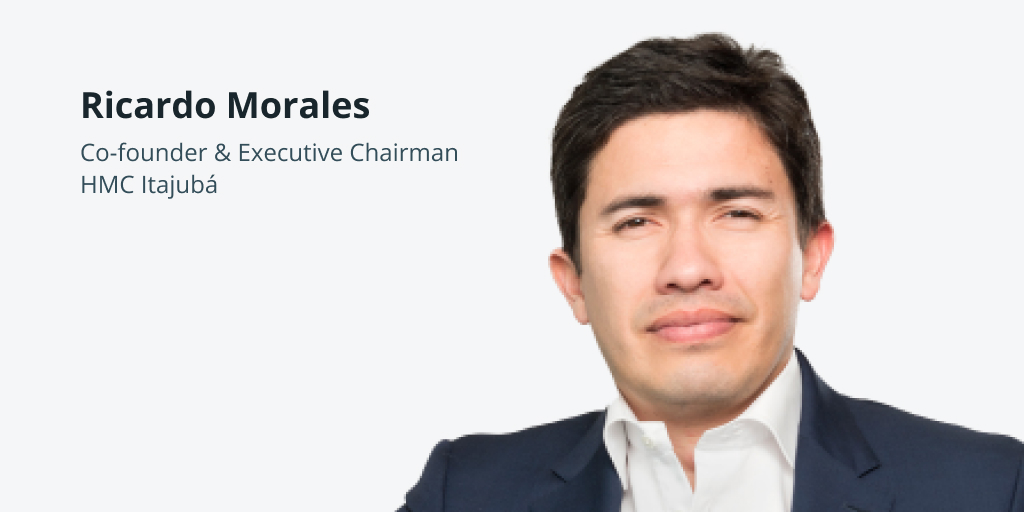
Prior to co-founding HMC in 2009, Ricardo Morales was Partner, Managing Director and Head of Latin America Institutional Sales at Larraín Vial Investment Bank. Ricardo received his Master in Macroeconomics and Financial Economics from Pontificia Universidad Católica, Chile, and a specialization in Private Equity from London Business School.